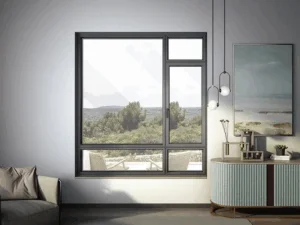
Every surface emits heat in the form of infrared radiation. Glass is no exception. Standard glass absorbs heat and then re-radiates it in both directions, inside and out. Low-E glass has a microscopically thin metallic coating that reflects most of that infrared energy back to where it came from.
Think of it like a two-way mirror for heat. In winter, it reflects your indoor warmth into the room. In summer, it bounces the sun’s radiant heat back outside before it can heat your interior. The coating itself is invisible to the naked eye. You won’t see it or feel any difference in texture. But the physics it performs are measurable, and the numbers show up on your utility bills.
How Does Low-E Glass Work in a Pass-Through Window?
The interior might be climate-controlled. The exterior is not. They open between an indoor space and an outdoor area, like a kitchen counter and a patio, a bar and a deck, or a food truck and the street. That position puts them under more thermal stress than a standard wall window.
Here’s why that matters. A pass-through window, when closed, has to hold a temperature boundary. The interior might be climate-controlled. The exterior is not. That gap between the two environments is where energy loss happens.
Low-E glass helps because the coating reduces conductive and radiant heat transfer through the glass itself. When you pair that glass with a double-pane or triple-pane unit, the argon or krypton gas sealed between the panes slows conduction even further. The Low-E coating and the insulated glass unit work together as a system.
For a pass-through window specifically, this matters most when the window is closed. When the window is open, its insulating benefits are naturally reduced. But during evenings, off-season months, or cooler mornings when the window stays shut, Low-E glass keeps your HVAC system from fighting a losing battle through the glass.
Explore Our Window Collection
Browse our range of custom pass-through windows designed to transform your space. Discover quality, style, and functionality in every product.
Shop Now
Soft-Coat vs. Hard-Coat Low-E: Which One Do You Need?
Not all Low-E glass is the same. Two manufacturing methods exist, and they perform differently.
Hard-coat Low-E receives the metallic coating while the glass is still hot during manufacturing. This bakes the coating into the surface. It’s durable and can be used in single-pane applications. The trade-off is that it’s slightly less effective at reflecting radiant heat compared to soft-coat.
Soft-coat Low-E applies the coating after the glass cools, using a vacuum deposition process. This produces a higher-performing coating with a lower emissivity rating, meaning it reflects heat more effectively. The downside is that soft-coat glass is more sensitive and needs to be sealed inside an insulated glass unit to protect the coating from air and moisture.
For pass-through windows in residential or commercial settings, soft-coat Low-E inside a double-pane unit is usually the better choice. You get the performance benefit without worrying about coating degradation, because the sealed unit protects it.
If you’re building in a climate with harsh winters, look for a Low-E glass with a higher Solar Heat Gain Coefficient (SHGC). That allows more of the sun’s passive warmth inside during cold months. In hot climates, a lower SHGC keeps solar heat out. Your window manufacturer or supplier can walk you through the right spec for your region.
Does Low-E Glass Actually Reduce Energy Bills?
Yes, but the size of the reduction depends on a few things.
The biggest variables are your climate, your existing insulation, and how much glass surface area you have. A single pass-through window won’t transform your energy costs the way replacing every window in a house would. But it contributes to the overall thermal envelope of the space.
The Energy Star program, managed by the U.S. Environmental Protection Agency and Department of Energy, certifies windows that meet regional efficiency thresholds. Energy Star-certified windows, many of which use Low-E coatings, can save households between $100 and $500 per year compared to single-pane windows without coatings, according to Energy Star’s own estimates. That range varies by home size, climate zone, and heating or cooling source.
For a pass-through window at a bar, restaurant, or home kitchen opening to a patio, the savings are more about comfort than dramatic bill reduction. You’re not losing hundreds of dollars a month through one window. But you are preventing heat transfer that forces your HVAC or kitchen ventilation system to work harder. Over time, that adds up.
Questions About Your Order?
Learn about our customer service policies, measuring guidelines, shipping details, and get direct access to our management team for personalized support.
Get Support Now
Can Low-E Glass Block UV Rays?
This is one of the most common questions people ask, and the answer is yes, with some nuance. Low-E coatings block a significant portion of ultraviolet radiation. Most quality Low-E glass blocks 95 percent or more of UV-A and UV-B rays. That’s meaningful. UV exposure is what fades hardwood floors, bleaches upholstery, and degrades artwork over time.
For a pass-through window opening to a sunny patio or outdoor bar area, UV protection has real practical value. Wood countertops, indoor furniture near the opening, and even food displays can all show UV damage over years of sun exposure.
It’s worth noting that visible light transmittance (VLT) is separate from UV blocking. You can have a Low-E glass that blocks most UV radiation while still letting in plenty of natural light. The coating targets the invisible spectrum, not the visible one. That’s the point. You get the light without the damage.
Is Low-E Glass Worth It for a Pass-Through Window?
Pass-through windows are a unique product. They open and close repeatedly. They bridge conditioned and unconditioned space. And they often face direct sun exposure, especially on south- or west-facing walls.
Low-E glass makes sense for a pass-through window in several situations:
- You live in a climate with real seasonal temperature swings
The bigger the difference between indoor and outdoor temperatures, the more work your glass has to do. Low-E earns its cost in these environments.
- The window faces direct sun for several hours a day
Solar heat gain through uncoated glass is significant. Low-E with a low SHGC rating cuts that heat load substantially.
- You care about UV protection near the opening
If there’s flooring, furniture, or finish work near the pass-through that you want to protect, Low-E glass slows the UV damage that standard glass allows through.
- You’re already choosing a quality window
If you’re investing in a well-built pass-through window with solid hardware and a good frame, the incremental cost of upgrading to Low-E glass is usually small relative to the total project cost. It makes sense to get it right the first time.
Contact Us and Enhance your Space with OpenUp® today!
Get a free consultation with specialists who understand energy-efficient windows for homes.
Book a Free Call
Frequently Asked Questions
- Does Low-E glass make a pass-through window more energy efficient?
Yes. Low-E glass reflects heat while allowing natural light inside, helping reduce heat transfer and improving the energy efficiency of your pass-through window.
- How much does it cost to upgrade to Low-E glass?
The cost varies by window size, glass type, and manufacturer. In most cases, adding Low-E glass is a modest upgrade compared to the overall cost of a new pass-through window.
- Can Low-E glass reduce fading of furniture and countertops?
Yes. Most Low-E glass blocks over 95% of harmful UV rays, helping protect flooring, furniture, countertops, and interior finishes from fading over time.