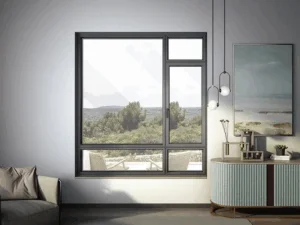
A gas strut window holds itself open with a small pressurized cylinder instead of a hinge, chain, or crank. It’s a small piece of hardware, but when it fails, the whole window stops working the way it should. The sash won’t stay up, or it drops shut on your fingers, or it just feels stiff.
Most guides tell you to “wipe it down and check the seals”. That’s fine advice, but it skips the part that actually explains why gas struts fail: they’re rated in cycles, not years. Once you understand that, the maintenance schedule starts to make a lot more sense.
What a Gas Strut Actually Does in Your Window
A gas strut is a sealed metal tube filled with pressurized nitrogen and a piston rod. Push or pull the rod, and the gas inside compresses or expands, giving you smooth resistance instead of a sudden drop or a hard slam. That’s the same technology used in car tailgates, cabinet doors, and office chairs, just scaled down for a window sash. Because the gas is sealed inside a single unit, a strut can’t be topped up or refilled once it starts losing pressure.
How Often Should Gas Strut Windows Be Serviced?
For a typical home, a quick visual and functional check twice a year covers most of what matters. Spring and fall work well, since that’s when temperature swings tend to expose weak struts anyway.
A twice-yearly check should cover the following:
- Does the sash hold its position without drifting down?
- Is there any visible oil residue near the rod or fittings?
- Do the mounting brackets feel loose when you wiggle them by hand?
- Does the strut move smoothly, or does it catch and jerk?
Windows in high-use rooms (kids’ bedrooms, kitchens, and sunrooms) are worth a monthly glance. It takes ten seconds and catches problems before they turn into a sash slamming down on someone’s hand.
Explore Our Window Collection
Browse our range of custom pass-through windows designed to transform your space. Discover quality, style, and functionality in every product.
Shop Now
What Maintenance Do Gas Strut Windows Require?
The maintenance itself is light. Struts aren’t a component you lubricate, adjust, or tune the way you would a hinge or a chain mechanism.
- Keep the rod clean. Dust and grit on the exposed piston rod get dragged into the seal every time the window opens. A soft, dry cloth wiped along the rod after cleaning the window removes most of it.
- Skip household cleaners on the strut itself. Glass cleaner, degreasers, and anything with ammonia can break down the rubber seals over time. Stick to a dry cloth or a cloth lightly dampened with water if there’s stubborn grime.
- Check the mounting hardware. Screws and brackets loosen with repeated use and seasonal wood movement. A loose bracket puts uneven side-load on the strut, which shortens its working life fast. A screwdriver and thirty seconds per window fix this before it becomes a bigger problem.
- Never force a stiff strut. If the sash feels sluggish, don’t yank it. Forcing a strut past its natural resistance can bend the rod or damage the seal, and a bent rod isn’t something you can straighten back to spec. WDS Components, a UK gas strut supplier, notes that a strut which sticks after storage or a cold snap usually just needs a gentle tap on the piston rod with a mallet to free it, not a hard pull.
- Watch the orientation. Struts are designed to work best when mounted a certain way, often with the rod pointing down so gravity helps the internal damping do its job. If a strut is installed backward, it wears unevenly no matter how well you maintain it.
Questions About Your Order?
Learn about our customer service policies, measuring guidelines, shipping details, and get direct access to our management team for personalized support.
Get Support Now
Warning Signs a Strut Is on Its Way Out
Struts rarely fail without giving some notice first. Watch for:
- The sash creeps down on its own. This is the clearest sign of gas leakage. A healthy strut holds position; a weak one loses the fight against gravity a little more each week.
- A hissing sound during operation. That’s escaping gas, and once it’s out, it’s out for good.
- Oily residue around the rod. Struts use a small amount of internal oil for damping. If it’s leaking out, the seal has failed.
- Uneven movement between two struts on the same window. Paired struts should move together. If one drags behind the other, it’s losing pressure faster than its twin.
- Visible pitting, rust, or dents on the cylinder. Physical damage to the tube compromises the seal and, depending on severity, can be a safety issue rather than just a performance one.
Any one of these means the strut is heading toward the end of its cycle life, not the start of a repair job.
Contact Us and Enhance your Space with OpenUp® today!
Get a free consultation with specialists who understand energy-efficient windows for homes.
Book a Free Call
Frequently Asked Question
- Should I lubricate a gas strut window?
No. Gas struts are sealed units and don’t need lubrication. Adding oil, grease, or spray lubricants to the piston rod can attract dirt and damage the seals. Simply keep the rod clean with a soft, dry cloth.
- Why won’t my gas strut window stay open?
If your window slowly drops or won’t stay open, the gas strut has likely lost pressure or reached the end of its service life. Loose mounting brackets can also affect performance, so check the hardware before replacing the strut.
- Can I replace just the gas strut, or do I need a new window?
In most cases, you only need to replace the gas strut. As long as the window frame, sash, and hardware are in good condition, installing a matching replacement strut restores normal operation.
- What causes a gas strut to fail early?
The most common causes include frequent daily use, dirt on the piston rod, loose mounting brackets, incorrect installation, corrosion, and exposure to harsh weather. Regular inspections can help extend the life of the strut.
- Is it safe to keep using a window with a weak gas strut?
It’s not recommended. A failing gas strut can allow the sash to close unexpectedly, increasing the risk of injury and placing extra stress on the window hardware. Replacing a worn strut early is safer and can help prevent additional repairs.