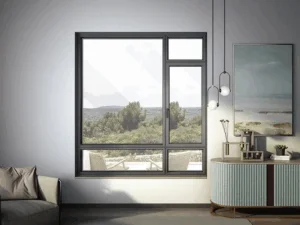
Not all awning windows work the same way. The right type depends on your room, climate, and frame choice. This guide breaks down every awning window type so you can buy with confidence and stop guessing.
What Makes a Window an Awning Window?
An awning window hinges at the top and opens outward from the bottom. That bottom-swinging action creates a canopy effect. Rain runs off the glass instead of pouring inside, so you can keep the window open even in light rain.
That makes awning windows a strong pick for wet climates, kitchens, bathrooms, and any wall where you want constant fresh air without weather risk.
Related Article: What is an Awning Window?
Explore Our Window Collection
Browse our range of custom pass-through windows designed to transform your space. Discover quality, style, and functionality in every product.
Shop Now
Awning Window Types by Configuration and Opening Style
The configuration tells you how many panels sit in one frame and how they open together. Here is a breakdown of the six main configurations.
1. Single Awning Panel
This is the most common type. One glass panel sits in one frame and hinges at the top. It works in almost every room and every wall position. Most people picture this when someone says “awning window”.
2. Stacked Awning Windows
Two or more single awning units stack on top of each other in the same wall opening. Each panel opens independently. Stacked units suit taller walls where a single panel would look out of scale. They also let you control how much air comes in at different heights.
3. Awning Over or Under a Fixed Panel
A fixed pane (non-opening glass) pairs with one or more awning panels above or below it. The fixed panel brings in light. The awning panel handles ventilation. This combination works well in living rooms and dining rooms where you want a large glass area without fully opening the entire window.
4. Multi-Lite Awning Windows
One frame holds two, three, or four separate glass panels side by side. Each “lite” (individual glass unit) opens or stays fixed depending on the design. Multi-lite configurations suit wide openings like servery windows between a kitchen and outdoor entertaining area.
5. Awning Combined with Casement or Picture Window
Awning windows pair naturally with casement windows (side-hinged) or fixed picture windows. Manufacturers like Andersen Windows and Pella Corporation commonly offer these as coordinated window families, so the frames, finishes, and hardware all match across a facade.
Questions About Your Order?
Learn about our customer service policies, measuring guidelines, shipping details, and get direct access to our management team for personalized support.
Get Support Now
Awning Window Types by Glazing
The glass you choose inside the frame has a bigger impact on comfort, energy bills, and privacy than most buyers realise. Let’s break it down.
Single-Pane Glass
Single-pane windows use one sheet of glass with no air gap. They offer minimal insulation and let heat and cold pass through easily. You’ll mainly find them in older homes or very basic sheds. For any new build or renovation, a single pane is not the right call.
Double Glazed Awning Windows
Double-glazed units trap a layer of gas (usually argon or air) between two panes of glass. That gap acts as an insulating barrier. It slows heat gain in summer, slows heat loss in winter, and cuts down outside noise significantly.
The U.S. Department of Energy confirms that double-pane windows can reduce heat loss by up to 50% compared to single-pane glass. That directly lowers heating and cooling costs year-round.
Milgard Windows & Doors and Andersen Windows both offer double-glazed awning units as their standard product across most residential lines.
Low-E Glass (Low-Emissivity)
Low-E glass carries an invisible metallic coating on the glass surface. That coating reflects infrared heat away from your interior in summer and keeps warmth inside during winter. Natural light still comes through clearly.
VELUX and other major manufacturers include Low-E as a standard upgrade on energy-rated window products. ENERGY STAR certification in the US and similar ratings use low-E performance as part of their scoring criteria.
Tinted and Frosted Glass
Tinted glass reduces solar glare and heat gain through colour. Bronze, grey, and blue tints are common. Frosted or obscure glass scatters light and blocks visibility without blocking airflow. Frosted glass works well in bathroom awning windows where privacy matters more than the view.
Laminated and Safety Glass
Laminated glass bonds two panes around a plastic interlayer (usually PVB). If the glass breaks, the interlayer holds the fragments in place. This is the same principle used in car windscreens. Building codes in many areas require safety glass in windows below a certain height or near floor level, so always check your local code before specifying.
Awning Window Types by Size and Placement
Where you put the window and how large it is shape the entire feel of a room. Here is what to know before you measure.
-
Standard vs Custom Sizing
Standard awning windows follow common widths (typically 600mm to 1200mm) and heights (typically 450mm to 900mm). Standard sizing lowers cost because frames and hardware are pre-configured.
Custom sizing suits irregular wall openings, heritage buildings, or design-specific projects. At OpenUp Windows, we manufacture custom aluminium awning windows to your exact measurements, so you’re not forced to compromise on the wall opening or pad out the frame with filler.
Placing an awning window high on a wall, close to the ceiling, solves two problems at once. First, it brings in ventilation at the level where warm air naturally accumulates. Second, it preserves wall space below for furniture or cabinetry while still keeping privacy intact.
High-wall awning windows are common above kitchen splashbacks, in bathrooms along the shower wall, and in bedrooms where a standard window height would compromise furniture layout.
-
Bathroom and Kitchen Sizing
Bathrooms and kitchens share a common need: ventilation without exposure. A narrow awning window (around 600 mm wide by 450 mm tall) at high-wall position delivers airflow while keeping the interior private from street level.
Frosted or obscure glass combined with high-wall placement means no blind or curtain is needed at all, which suits contemporary architecture and simplifies cleaning.
Contact Us and Enhance your Space with OpenUp® today!
Get a free consultation with specialists who understand energy-efficient windows for homes.
Book a Free Call
Frequently Asked Questions
What is the most popular type of awning window?
Single-panel awning windows are the most popular because they suit most rooms, provide great airflow, and fit both modern and traditional homes.
Are double-glazed awning windows worth it?
Yes. Double-glazed awning windows improve insulation, reduce outside noise, and help lower heating and cooling costs throughout the year.
Which frame material is best for awning windows?
Aluminium is one of the best choices for durability, low maintenance, slim frames, and modern design. uPVC works well for energy efficiency, while timber suits heritage-style homes.